


Travel to Rio de Janeiro with people who want the same trip as you
What to see, when to go, which route to pick and who to travel with.
Rio de Janeiro in a nutshell
Rio de Janeiro works well in 5 to 7 days: Christ the Redeemer and Sugarloaf, the beaches of Copacabana and Ipanema, Santa Teresa and Lapa, and the rainforest that reaches right into the city. The easiest time to go is May to October, with less heat and less rain. Travelling in a group, you share the costs and explore the city with people you already know from the chat.
Open trips to Rio de Janeiro right now
See who is going and talk to the group before you decide.
What to see in Rio de Janeiro
Eight places to fill your days. Visit times are approximate.

Christ the Redeemer and Corcovado
The statue is 30 metres tall, 38 with its pedestal, and opens its arms over the city from the top of Corcovado, about 710 metres up. You get there on the train that leaves from Cosme Velho or on the official vans. Book ahead and buy only on the official websites.



Sugarloaf Mountain
A 396-metre rock above the bay. You go up in two cable cars: the first from Praia Vermelha to Morro da Urca, the second to the summit. Brazil's first cable car opened here in 1912. From the top you see Botafogo, Copacabana and the mouth of the bay.

Copacabana
About four kilometres of beach and a promenade with the famous black-and-white wave pavement, designed by Burle Marx. At both ends there are forts you can visit, with good views. Bars and restaurants are open by day and by night.

Ipanema and Arpoador
Ipanema stretches between Leblon and the Arpoador rock, with the two peaks of Dois Irmãos behind. In summer, people often applaud the sunset from the beach. Climb the Arpoador rock to watch it unhurried.

Santa Teresa and Lapa
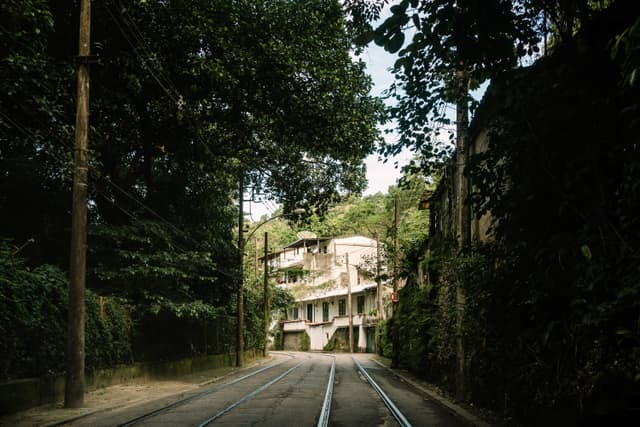
Santa Teresa is a hillside neighbourhood with artists' studios, galleries and views over the city. Below, in Lapa, are the Arches: an aqueduct from 1750 with two storeys of arches. Between the two neighbourhoods climb the Selarón Steps, with 215 steps and over 2,000 tiles from more than 60 countries.
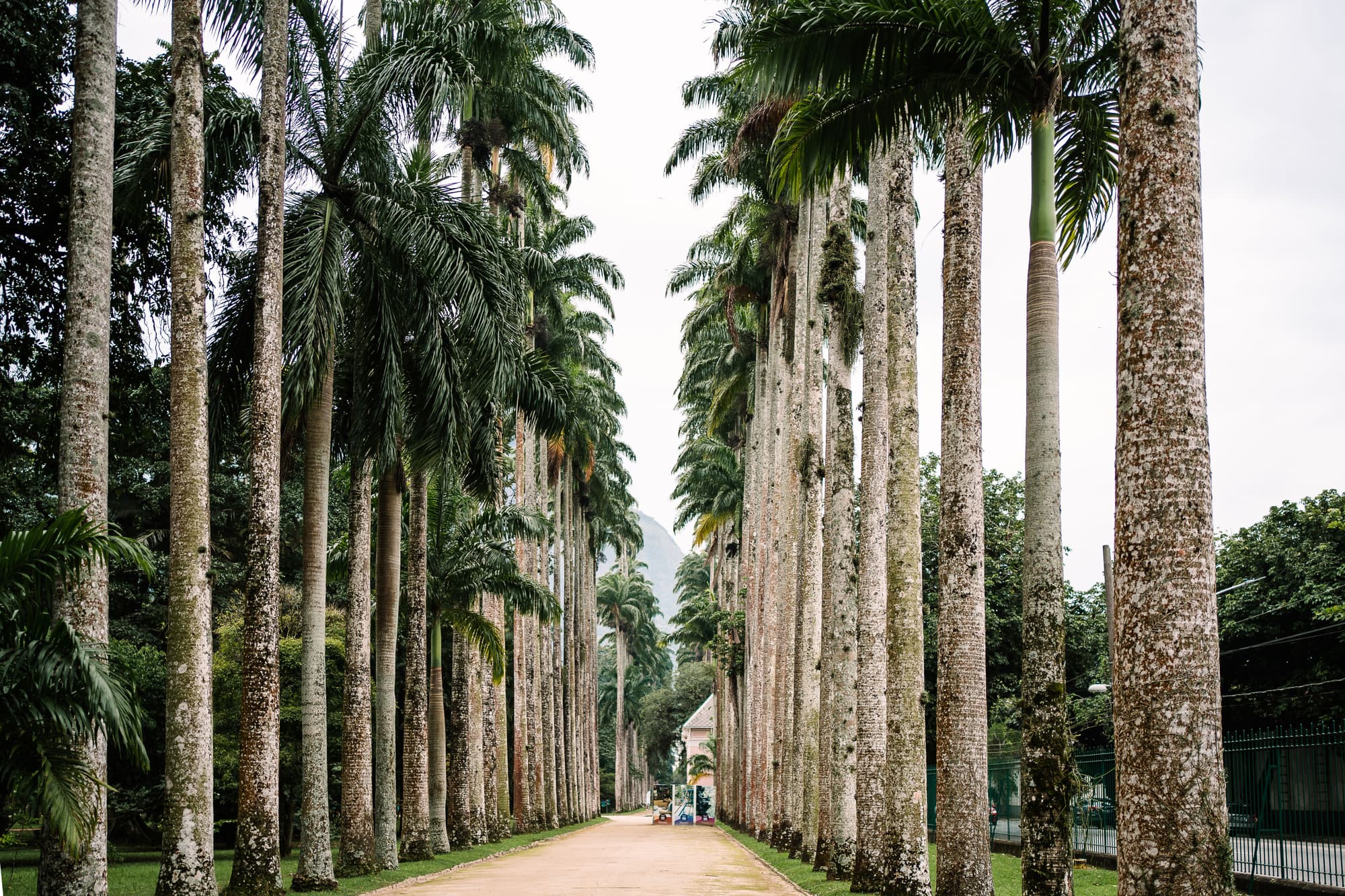
Botanical Garden and the lagoon
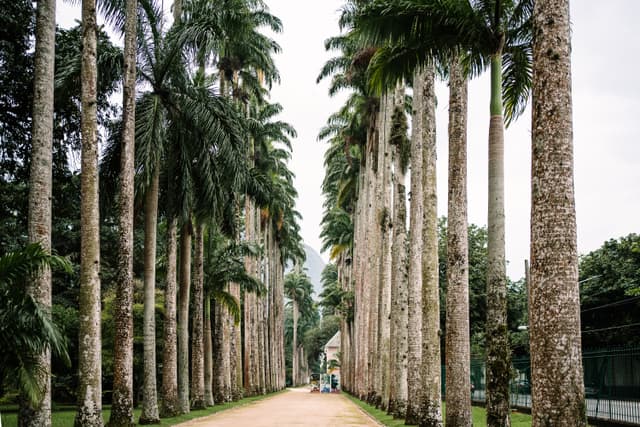
Founded in 1808, at the foot of Corcovado, the Botanical Garden has a 750-metre avenue of 134 royal palms. Next to it is Lagoa Rodrigo de Freitas, between Ipanema, Leblon and the garden, with about 7.5 km of cycle path around it.

Tijuca Forest
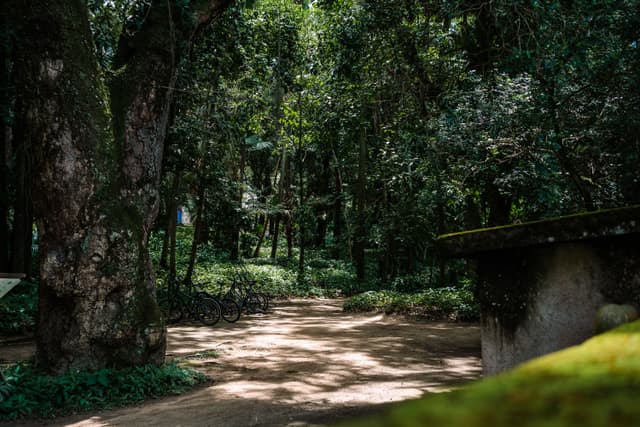
Almost 4,000 hectares of rainforest inside the city, in Tijuca National Park. In the 19th century it was replanted with over 100,000 trees. It has trails, waterfalls and viewpoints: Pico da Tijuca, at 1,022 metres, Cascatinha Taunay, Vista Chinesa and Parque Lage.

Historic centre and the Museum of Tomorrow
The centre is the oldest part of the city, on the edge of the bay. In Praça Mauá is the Museum of Tomorrow, a white building by Santiago Calatrava, opened in 2015, about sustainability. In Cinelândia is the Theatro Municipal, from 1909. Go on a weekday and by day: at night the streets are almost empty.
Day trips and extras
For when you have seen the classics and fancy getting out of the city. Both are long trips: you enjoy them more with a night there.

Paraty
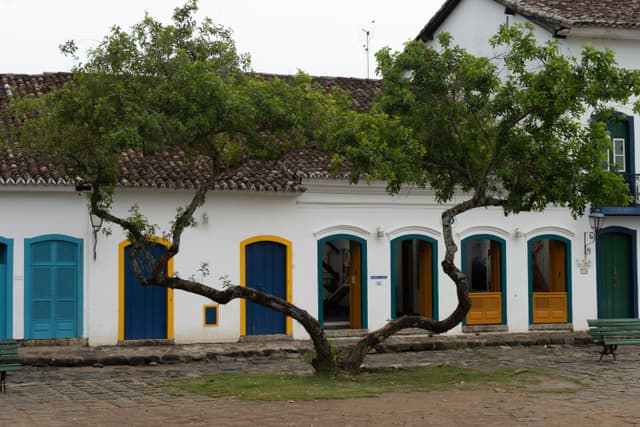
A colonial town on the coast, more than 230 km from Rio and a World Heritage Site since 2019. Its historic centre has cobbled streets and no cars. At full moon and high tide, the sea sometimes floods the streets. There are buses from Rio.

Ilha Grande
An island of about 193 km², off Angra dos Reis, with no cars or roads. It has more than 150 km of trails and beaches such as Lopes Mendes, about a two-hour walk from Vila do Abraão. You get there by boat from the coast.
Key facts about Rio de Janeiro
What people ask most before they go, at a glance.
- Language
- Portuguese. A 'bom dia' and an 'obrigado' (or 'obrigada') open doors. Wikipedia · 24 Nov 2026
- Currency
- Brazilian real (BRL). You can generally pay by card and withdraw cash from ATMs. Spanish Foreign Ministry · 24 Nov 2026
- Documents
- On a Spanish passport: valid for 6 months from your departure from Brazil; the ID card is not accepted. No visa for tourist stays under 90 days. Spanish Foreign Ministry · 24 Nov 2026
- Plugs
- Types N and C (the two-round-pin plug used in Spain fits), 60 Hz. Voltage is 127 V or 220 V depending on the area (the state of Rio has both): check the label on each device. World Standards · 24 Nov 2026
- Time zone
- UTC-3 all year, with no clock change. Compared with Madrid, 4 hours behind in winter and 5 in summer (in 2026, 29 March to 25 October). timeanddate · 24 Nov 2026
- Vaccines and health
- Yellow fever: Spain's foreign ministry recommends vaccination, at least 10 days before you leave. Dengue: high risk, especially in the rainy season. Spanish Foreign Ministry · 24 Nov 2026
- Safety
- Spain's foreign ministry advises travelling with caution: there are phone thefts and muggings, especially in the south zone and on the beaches. Avoid the favelas. Spanish Foreign Ministry · 24 Nov 2026
When to go to Rio de Janeiro
Tap a month to see what to expect. From December to March, highs hover around 30 degrees and there are storms.
Rio de Janeiro routes: 3, 5 or 7 days
Pick how many days you have. The 3-day route is the getaway; with 5 and 7 days you go at a calmer pace and leave the city.
Christ the Redeemer and Sugarloaf
Go up to Christ in the morning, by train or official van. In the afternoon, Sugarloaf: the cable car is open until 21:00, so you can watch the sun go down from the top.



Copacabana, Ipanema and Arpoador
A stroll and a beach morning in Copacabana. In the afternoon, Ipanema and the Arpoador rock to see the day out.



Historic centre and Lapa
Go by day and on a weekday. The Museum of Tomorrow, a walk around Cinelândia and the Arcos da Lapa. To get back, an official taxi or an app.



Arrival and Copacabana
Settle in and stroll along Copacabana at sunset. Have dinner with the group at one of the beachfront restaurants.
Christ the Redeemer and the Botanical Garden
Go up to Christ in the morning. In the afternoon, head down to the Botanical Garden, at the foot of Corcovado, and walk the avenue of royal palms.
Sugarloaf and Botafogo
Both cable cars, at an easy pace, up to Morro da Urca and the summit. Save the sunset for the top.

Ipanema, Arpoador and the lagoon
Beach time in Ipanema in the morning, the Arpoador rock at sunset and, if you have energy left, a walk around Lagoa Rodrigo de Freitas.


Centre, Lapa and Santa Teresa
The Museum of Tomorrow, Cinelândia and the Arcos da Lapa. Then climb to Santa Teresa by the Selarón Steps. All by day: the centre is almost empty once evening falls.
Arrival and Copacabana
Settle in and stroll along Copacabana at sunset. Have dinner with the group at one of the beachfront restaurants.
Christ the Redeemer and the Botanical Garden
Go up to Christ in the morning. In the afternoon, the Botanical Garden, at the foot of Corcovado, with its avenue of royal palms.
Sugarloaf and Botafogo
Both cable cars, at an easy pace, up to Morro da Urca and the summit. Save the sunset for the top.
Ipanema, Arpoador and the lagoon
Beach time in Ipanema in the morning, the Arpoador rock at sunset and a walk around Lagoa Rodrigo de Freitas.
Centre, Museum of Tomorrow and Lapa
A day for the historic centre, by day and on a weekday: the Museum of Tomorrow, Cinelândia and the Arcos da Lapa.

Tijuca Forest and Santa Teresa
In the morning, Tijuca Forest and Parque Lage, which open at 8:00. In the afternoon, Santa Teresa and the Selarón Steps, always by day.

Paraty or Ilha Grande
A day out of the city: the colonial town of Paraty, by road, or the island of Ilha Grande, by boat. Both are long trips: you enjoy them more with a night there.


Before you lock in the plan, check the opening times. Tijuca Forest is open from 8:00 to 17:00 and Sugarloaf until 21:00. For Ilha Grande, check the boat times first.
Before you pack
Where to stay, how to get around and what to know on day one.
Pick the area before the hotel
- South zone: Copacabana and Ipanema. The beach on foot and the metro close by. It is the most convenient base for getting around and for coming back at night.
- Santa Teresa. A neighbourhood on the hill, with artists, quiet streets and views. Be ready for hills.
- Getting around. The metro links the south zone with the centre: Copacabana (Cardeal Arcoverde and Siqueira Campos), Ipanema (General Osório) and Cinelândia, among others. For the rest, bus, official taxi or a ride-hailing app.
- From the airport. Galeão is about 20 km north of the centre. At the airports and the bus station, use official taxis only.
Four things that help
- Book Christ and Sugarloaf in advance. Buy only on their official websites. For Christ, the vans leave at set times.
- Look after your things. In the south zone and on the beaches, Spain's foreign ministry asks you not to lower your guard. Keep an eye on your belongings, do not carry jewellery or lots of cash, and do not pay by card or phone to street vendors. Avoid the favelas.
- Use official taxis or an app. Keep the window closed: the ministry warns of thefts from taxis with the window open.
- Protect yourself from mosquitoes. The ministry flags a high risk of dengue, especially in the rainy season. Bring repellent.
Rio de Janeiro is better with people who want the same trip as you
We want you to meet the people you will travel with, and for them to meet you. That is why, at TripOnTrib, this comes before you pack.
On agency trips you can join directly, without verifying. Booking and documents are handled directly with the agency.
What people ask before going to Rio de Janeiro
If one is missing, write to us and we will add it.
How many days do I need to see Rio de Janeiro?
With 3 days you can do a getaway: Christ the Redeemer, Sugarloaf, the beaches and the centre. With 5 you go at a calmer pace, and with 7 you add Tijuca Forest and a trip to Paraty or Ilha Grande, best with a night there.
When is the best time to go to Rio de Janeiro?
May to October, when it is less hot and rains less. From December to March it is hot, humid and stormy, with highs of about 30 degrees, but it is also the season of Carnival and Réveillon.
When is Rio Carnival in 2027?
Carnival 2027 runs from 5 to 10 February. The Special Group parades at the Sambadrome, on Avenida Marquês de Sapucaí, are on Sunday 7, Monday 8 and Tuesday 9 February. There are also blocos in the streets of the city. Book your trip and accommodation early.
What documents do I need to travel to Rio de Janeiro?
With a Spanish passport you need one valid for at least 6 months from your planned departure from Brazil. The Spanish ID card is not accepted. For tourist stays of under 90 days no visa is needed, but you are asked for a return flight with a confirmed date, a paid or guaranteed hotel booking and proof of funds: Spain's foreign ministry cites a minimum of 170 reais a day. Check its website before you leave. If you hold another passport, check the rules for your nationality.
Do I need any vaccines to go to Rio de Janeiro?
From Spain you are not asked for a yellow fever certificate to enter. Spain's foreign ministry recommends getting vaccinated against yellow fever before travelling to Brazil, and the vaccine takes 10 days to become effective. It also warns of a high risk of dengue, chikungunya and Zika, especially in the rainy season. Talk to your international vaccination centre.
Is it safe to travel to Rio de Janeiro?
Spain's foreign ministry recommends travelling to Brazil with caution, because crime levels are high: the most common are phone thefts and muggings. In the south zone of Rio it asks you not to lower your guard and not to lose sight of your things on the beaches. It advises avoiding the favelas, taking extra care in the centre, which is almost empty once evening falls, and using official taxis or ride-hailing apps. With a group it is easier to get around sensibly: you decide the plan and the transport together. Always read its Brazil page before you leave.
Is there a direct flight from Madrid to Rio de Janeiro?
Yes, with Iberia, in about 10 hours 20 minutes, four days a week according to Kayak. Days and airlines change with the season: check them before you book.
How do you get up to Christ the Redeemer?
The statue is at the top of Corcovado, about 710 metres up. You go up on the Trem do Corcovado, which leaves from Rua Cosme Velho 513, or on the official vans, which leave from Praça do Lido, in Copacabana, and from the Glória church, in Largo do Machado. The vans leave at set times. Buy tickets on the official websites, tremdocorcovado.rio and ingressos.paineirascorcovado.com.br, and check the hours and prices there, as they change.
How do the Sugarloaf and Museum of Tomorrow tickets work?
Sugarloaf is open Monday to Friday from 8:30 to 21:00 and on Saturdays and Sundays from 7:30 to 21:00, with last boarding at 19:30. You go up in two cable cars and tickets are bought on its official website. The Museum of Tomorrow charges 40 reais for general admission and 20 for the reduced rate, and 10 reais on the 10th of each month. Tickets come with a time slot. Hours and prices can change: check the official websites.
How much does a trip to Rio de Janeiro cost?
The price is set by whoever organises each trip. In the app you see the price and what it includes before you sign up.
How does group travel with TripOnTrib work?
You pick an open trip, see who is going and talk to the group in the chat before you decide. Everyone pays their own share.
What happens if the trip doesn't fill up?
On each trip you can see how many people are still needed for it to go ahead.
How we know what we tell you
Last check of this page: 24 Nov 2026. If something changes, we update it and the date changes.
See the 33 sources we checked
- Spanish Foreign Ministry: travel advice for Brazil (documents, vaccines, currency and safety warnings) accessed 24 Nov 2026
- Kayak: direct flight from Madrid to Rio de Janeiro accessed 24 Nov 2026
- Wikipedia: Brazil (language and currency) accessed 24 Nov 2026
- World Standards: plugs and voltage in Brazil accessed 24 Nov 2026
- timeanddate: Rio de Janeiro's time (no summer time) accessed 24 Nov 2026
- timeanddate: Madrid's time and summer time in 2026 accessed 24 Nov 2026
- Climates to Travel: climate and best time to visit Rio de Janeiro accessed 24 Nov 2026
- Wikipedia: Rio Carnival (2027 dates and the Sambadrome) accessed 24 Nov 2026
- Diário do Rio: order and days of the Special Group parades in 2027 accessed 24 Nov 2026
- Wikipedia: Christ the Redeemer (height and year) accessed 24 Nov 2026
- Wikipedia: Corcovado (height of the mountain) accessed 24 Nov 2026
- Riotur: Christ the Redeemer (getting there, train and official vans) accessed 24 Nov 2026
- Wikipedia: Sugarloaf Mountain (height and cable car) accessed 24 Nov 2026
- Riotur: Sugarloaf Mountain accessed 24 Nov 2026
- Sugarloaf Mountain (Bondinho): official opening hours accessed 24 Nov 2026
- Wikipedia: Copacabana accessed 24 Nov 2026
- Riotur: Copacabana and Leme accessed 24 Nov 2026
- Wikipedia: Ipanema accessed 24 Nov 2026
- Wikipedia: Arcos da Lapa (Carioca Aqueduct) accessed 24 Nov 2026
- Wikipedia: Selarón Steps accessed 24 Nov 2026
- Wikipedia: Santa Teresa accessed 24 Nov 2026
- Wikipedia: Rio de Janeiro Botanical Garden accessed 24 Nov 2026
- Riotur: Botanical Garden accessed 24 Nov 2026
- Wikipedia: Lagoa Rodrigo de Freitas accessed 24 Nov 2026
- Riotur: Tijuca National Park (hours and places) accessed 24 Nov 2026
- Wikipedia: Tijuca Forest accessed 24 Nov 2026
- Museum of Tomorrow: visit booking (prices and address) accessed 24 Nov 2026
- Wikipedia: Museum of Tomorrow accessed 24 Nov 2026
- Wikipedia: Theatro Municipal of Rio de Janeiro accessed 24 Nov 2026
- Wikipedia: Rio de Janeiro Metro accessed 24 Nov 2026
- Wikivoyage: Rio de Janeiro (Galeão airport) accessed 24 Nov 2026
- Wikipedia: Paraty accessed 24 Nov 2026
- Wikipedia: Ilha Grande accessed 24 Nov 2026
Does your agency have a trip to Rio de Janeiro?
Show it to thousands of travellers looking for people to travel with. You set the itinerary, the price and the spots.
I want to fill my spots


Fancy Rio de Janeiro with people who want the same trip as you?
See who is going and talk to the group before you decide. Let the adventure begin.
 Scan with your phone